


Wooden Puzzle Bliss
4.69.11K Reviews
App Specs
- Version
- 1.13.0
- Updated On
- License
- Free
- Downloads
- 1,000,000+
- Developer
- Gimica GmbH
- Categories
- Puzzle
- Platform
- Android
Screenshots
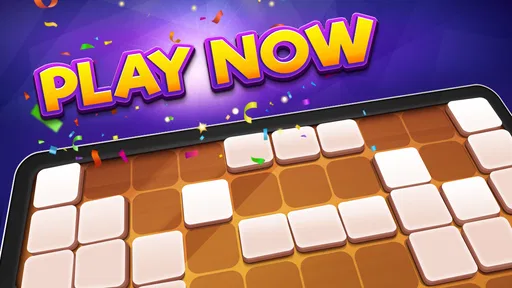
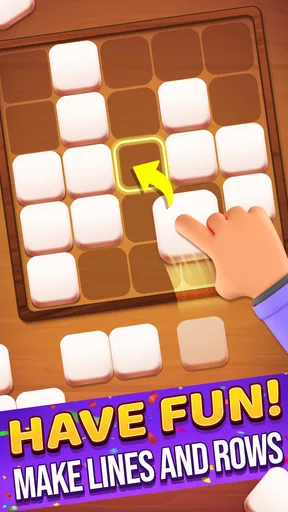
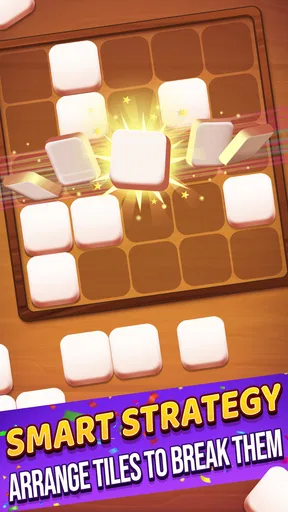

 Analysis by AppCompare
Wooden Puzzle Bliss is the kind of puzzle game I can open for a few quiet minutes without needing to learn a complicated rule set. Its central idea is easy to understand: place matching wooden blocks on a grid, but avoid filling the board completely. That sounds simple, and the first sessions are exactly that—pleasant, quick to grasp, and just demanding enough to make me think before every move. The more important question, though, is whether it still deserves a place on my phone after the first week. In my experience, its answer depends on what I want from a puzzle game: calm repetition and spatial planning, rather than a constantly changing adventure or a deep campaign.
Developed by Gimica GmbH, this free puzzle game is aimed at Everyone and runs on Android devices using version 7.0 or later. It has reached over one million installs, with a 4.6 average from around 112 thousand ratings, which gives a useful indication that its straightforward style has found a broad audience. The current version is 1.13.0. I would describe it as a casual brain-training game first and a score-chasing challenge second. It works best when I treat each board as a small exercise in restraint: a tempting placement may help immediately but create an awkward corner later.
Why the first week feels so satisfying
The opening appeal comes from the lack of friction. I do not have to memorize a long tutorial or understand a story before playing. The wooden visual theme gives the board a softer, less hectic feel than many bright puzzle games, and the matching mechanic becomes readable almost immediately. That makes it particularly suitable for short breaks, such as waiting for a coffee, sitting on public transport, or winding down before bed.
What kept me interested during the first few days was the small tension between clearing space and protecting future options. Matching blocks is not merely a matter of finding an open area. I have to consider the shape of the pieces, the gaps they leave, and whether a move will make the remaining grid harder to use. A move that looks efficient can be poor if it divides the board into narrow pockets. This gives the game more thoughtfulness than its relaxed presentation initially suggests.
I also like that the challenge does not depend on fast tapping. There is room to pause, rotate my plan mentally, and choose a safer arrangement. That makes it a good fit for players who enjoy slow spatial reasoning rather than reflex-based play. Someone looking for a puzzle that tests reaction speed or rewards frantic input will probably find it too gentle.
My most useful early habit was to stop treating every available match as an opportunity that must be taken immediately. I began scanning the whole grid first, looking for the placements that preserved broad open areas. This is a small change, but it turns the experience from random fitting into deliberate planning. I would recommend doing the same from the first session, because the game becomes more enjoyable when the player learns to value flexibility over short-term clearance.
The free entry point also helps the first-week experience. I can try the game without committing money, and the Everyone rating makes it suitable for a wide household audience. In-app purchases range from $0.99 to $4.49 per item, so anyone who dislikes optional spending should pay attention to the purchase prompts and decide in advance whether the basic experience is enough. I would start with the free version and only consider spending after deciding whether the daily loop actually fits my habits.
Worth Reading Before You Choose

EA SPORTS FC Mobile 26 Is a Bigger Football Game, but It Takes Time

Flipboard Shows What News Apps Must Do Beyond the Feed

Switching to Android Auto Means Rethinking Your Driving Routine

Google Calendar Makes a Crowded Week Easier to Manage

Ludo King Makes the Most of the Minutes Between Plans

Baby Panda World Brings Quick Play to Modern Phones, but Its Game Library Feels Busy
The right way to use it in everyday life
A realistic use case is a ten-minute pause between tasks. Instead of opening a social feed and losing track of time, I can play a few boards, put the phone down, and return to work with my attention reset. The game is also useful for people who want a low-pressure evening activity but do not want a narrative they must follow or a multiplayer match that demands an immediate response.
There is a trade-off here. Because the rules are so accessible, the game asks me to create my own stopping point. If I keep playing simply because another board is available, the relaxing break can become a longer session than intended. I found it easier to keep the habit healthy by deciding beforehand whether I wanted one short break or a longer puzzle session. Its simplicity is a strength, but it also means the game does not provide much structure for managing my time.
What remains valuable after the novelty fades
After the first month, the main value is not discovery. I already understand the basic interaction, so the question becomes whether the planning challenge remains satisfying. For me, it does when I approach it as a compact mental warm-up. The board encourages me to think several placements ahead, notice patterns, and recover from a move that did not work as planned. Those skills are modest, but they give each session a purpose beyond simply passing time.
The recurring value is strongest for players who enjoy gradual improvement in decision-making. I can compare my own choices from one session to another: Did I preserve enough central space? Did I create a dead corner unnecessarily? Did I rush to clear a match because it looked attractive? These questions make the game more interesting than the store summary suggests, because the challenge is partly about building a better process rather than waiting for a dramatic new feature.
At the same time, I would not call it an endlessly evolving puzzle system. Its lasting appeal depends on whether I enjoy repeating a familiar type of spatial problem. Players who need new mechanics, a campaign, character progression, or a strong sense of narrative movement may feel that the game has shown them most of its identity fairly quickly. A more content-heavy puzzle title would be a better choice for someone who wants regular surprises.
Compared with classic block-fitting alternatives, Wooden Puzzle Bliss feels more relaxed and less focused on speed. Compared with match-three games, it offers less emphasis on chains, special effects, and rapid rewards, while asking more from my ability to manage space. Compared with daily puzzle apps, it is more flexible because I can play without waiting for a particular daily challenge, but it may provide less external motivation for returning every day. The best comparison depends on what keeps a player engaged: atmosphere and quiet planning here, versus novelty, competition, or progression elsewhere.
One practical method helped me preserve its value over time: I used different intentions for different sessions. Sometimes I played carefully, trying to make the most efficient placements. Other times I treated the board as a short concentration exercise and stopped once my attention began to drift. This prevented every session from feeling like a test of performance. It also made the game easier to maintain as a habit, because I did not need to be in the mood for a serious challenge every time I opened it.
Who will keep coming back
I think the strongest long-term audience is made up of people who like tactile-looking puzzle boards, clear rules, and quiet repetition. It suits commuters, casual players, older family members who prefer uncomplicated controls, and anyone who wants a small mental exercise without a competitive atmosphere. The Everyone rating supports that broad accessibility, although the individual appeal still depends on patience with repeated grid planning.
I would be more cautious about recommending it to players who quickly lose interest once they understand a game’s core loop. If you need a large collection of modes or a clear progression system to justify returning, the basic block-matching structure may not be enough. I would also point fans of timed puzzles toward a faster alternative, because the pleasure here comes from considering options rather than reacting under pressure.
Maintenance, friction, and reasons to take a break
The maintenance burden is low in the practical sense. I do not need to manage a complicated roster, remember a story, or keep up with other players. I can leave the game for days and return without feeling behind. That is a genuine advantage for a casual app, especially when my schedule is unpredictable. The game asks for attention only while I am playing, not for constant check-ins.
Its maintenance burden is higher in another sense: I have to supply the motivation myself. A game with missions, social goals, or a strong progression track can pull me back automatically. This one relies on the simple pleasure of solving another board. If that pleasure weakens, there may be little else to renew interest. I would not install it expecting a long-term obligation; I would keep it only if the short sessions continue to feel mentally refreshing.
Optional purchases are another point to consider. The game is free to start, but the available in-app items cost between $0.99 and $4.49 each. That does not automatically make the model intrusive, but it means I would be careful when handing the phone to a child or sharing a device. I prefer to decide whether I want the no-cost experience before exploring any extras. For many players, the sensible approach is to enjoy the core game without turning every moment of difficulty into a reason to buy something.
The main source of fatigue is repetition. The wooden presentation is pleasant at first, but visual calm cannot replace mechanical variety forever. If several sessions begin to feel interchangeable, I take that as a sign to rotate to another game rather than forcing a daily streak. This is important because a puzzle can remain well made while no longer being the right activity for that particular week.
A second source of fatigue is the pressure created by poor planning. When I fill useful space too early, the resulting board can feel more frustrating than intellectually rewarding. The solution is not to play faster. I get better results by leaving room for awkward shapes, avoiding narrow isolated gaps, and considering how a placement affects the next few decisions. That approach does not remove every difficult position, but it makes failure feel more connected to a choice I can improve.
A third limitation is that the relaxed presentation may undersell the need for concentration. I can open it expecting background entertainment and then discover that a careless move has made the board much harder to manage. For some players, that contrast will be enjoyable; for others, it may feel like the game is neither fully soothing nor fully demanding. I see it as a middle ground: calm in pace, but not entirely passive.
Small habits that improve the experience
I recommend looking for the move that preserves the most future options, not simply the move that clears the most space now. When two placements seem equally good, I choose the one that leaves larger connected areas rather than scattered pockets. I also avoid making a corner look “finished” too early, because a neat-looking edge can become a barrier for later pieces.
Another useful habit is to pause after a difficult placement instead of immediately correcting course with another impulsive move. The board often becomes easier to read when I stop chasing the previous mistake. This is especially helpful during short sessions, when the temptation is to rush because I have only a few minutes. A calm reset usually produces better decisions than trying to recover at speed.
For families, I would use the game as a conversation starter rather than a competition. Asking why someone chose a particular placement reveals different ways of seeing the grid and keeps the activity accessible to mixed skill levels. For personal use, I would keep notifications and purchase decisions separate from the puzzle itself, so the game remains a deliberate break instead of another source of digital pressure.
My long-term verdict
Wooden Puzzle Bliss earns lasting space on my phone if I want a dependable, low-pressure block puzzle that rewards patience. Its strongest qualities are its approachable rules, gentle visual identity, and emphasis on preserving room for future moves. I can use it for a brief concentration break, return after an absence without penalty, and improve by changing how I plan rather than by memorizing complicated systems.
It does not earn that space because it constantly reinvents itself. The recurring value is narrower and more honest: I return for the pleasure of arranging a board thoughtfully. That is enough for me during busy weeks, but not enough for someone who needs a campaign, frequent novelty, or competitive goals. The game is best understood as a reliable puzzle tool, not an all-purpose entertainment package.
My recommendation is to install it if you enjoy calm block puzzles with meaningful spatial choices and want something free to try on an Android device running 7.0 or later. Give it several short sessions rather than judging it after one quick look. If you find yourself naturally thinking about preserving space and improving your next placement, it may become a useful everyday habit. If the repeated grid starts feeling predictable, there is no reason to force the relationship; a more varied puzzle game will serve you better.
Overall, Gimica GmbH has made a focused game that understands the value of restraint. The free starting point, Everyone rating, and broad install base make it easy to approach, while the 4.6 average suggests that many players appreciate its formula. For me, Wooden Puzzle Bliss succeeds when I want a quiet mental reset and accept that its long-term charm comes from practice, not constant novelty. That is a modest promise, but it is one the game fulfills well.
Pros
- Relaxing gameplay suitable for short breaks or longer sessions.
- Simple controls make it easy for players of all ages to start.
- Offline play is convenient when no internet connection is available.
- Wooden-style visuals create a calm
- pleasant atmosphere.
- Puzzles can help improve focus and spatial problem-solving skills.
Cons
- Some levels may feel repetitive after extended play.
- Difficulty progression can be uneven between puzzle stages.
- Hints or extra tools may be limited without watching ads.
- Ads may interrupt the experience
- especially between completed puzzles.
- Players seeking fast action may find the gameplay too slow-paced.
FAQs for Wooden Puzzle Bliss
What is Wooden Puzzle Bliss?
Wooden Puzzle Bliss is a relaxing puzzle game centered on arranging, matching, or fitting wooden-style pieces into logical patterns. Its presentation is designed to feel calm and tactile, making it suitable for short sessions or longer play periods. The game generally focuses more on thoughtful problem-solving than fast reactions, so beginners can learn the mechanics gradually while experienced players can work toward completing increasingly challenging puzzles.
How do you play Wooden Puzzle Bliss?
Gameplay typically involves selecting wooden pieces and placing them on a board or into designated spaces according to the objective shown in each level. Depending on the puzzle, you may need to complete a shape, clear a row, match elements, or fit every piece without leaving gaps. Controls are usually based on tapping, dragging, and sometimes rotating pieces, making the game accessible on both Android and iOS devices.
Is Wooden Puzzle Bliss suitable for children and beginners?
Wooden Puzzle Bliss can be a good choice for beginners because its core controls are simple and the slower pace gives players time to understand each challenge. Younger players may also enjoy the colorful, wood-inspired design, although parents should review the game’s age rating and advertising settings before installation. Difficulty can increase over time, so some levels may require patience, planning, and repeated attempts.
Does Wooden Puzzle Bliss work without an internet connection?
Whether Wooden Puzzle Bliss can be played fully offline may depend on the specific version and the feature being used. Basic puzzle levels may remain available without a connection, but advertisements, cloud saving, updates, leaderboards, or other online services can require internet access. It is recommended to open the game once while connected, check which modes are accessible offline, and avoid assuming every feature works without data.
Is Wooden Puzzle Bliss free to download, and does it include purchases or ads?
Wooden Puzzle Bliss may be available as a free download, but free access does not always mean the entire experience is completely without limitations. Many mobile puzzle games use advertisements, optional in-app purchases, extra hints, or paid upgrades. Before downloading, check the official Google Play or App Store listing for current pricing, subscription details, advertising information, and the permissions requested by the application.


